MENU
MENU
In addition to the introductory seminar and the advanced seminars that build upon it, we also offer special seminars on selected topics at irregular intervals. These events address specific questions, applications, or experimental methods and provide an in-depth look at specific aspects of optical metrology and imaging. The spectrum ranges from practical experiments and application-oriented measurement methods to thematic excursions, such as into analog photography.
New to the program is a one-day seminar dedicated specifically to image capture techniques. This seminar is aimed not only at our customers from research and industry, but also at ambitious professional and prosumer photographers.
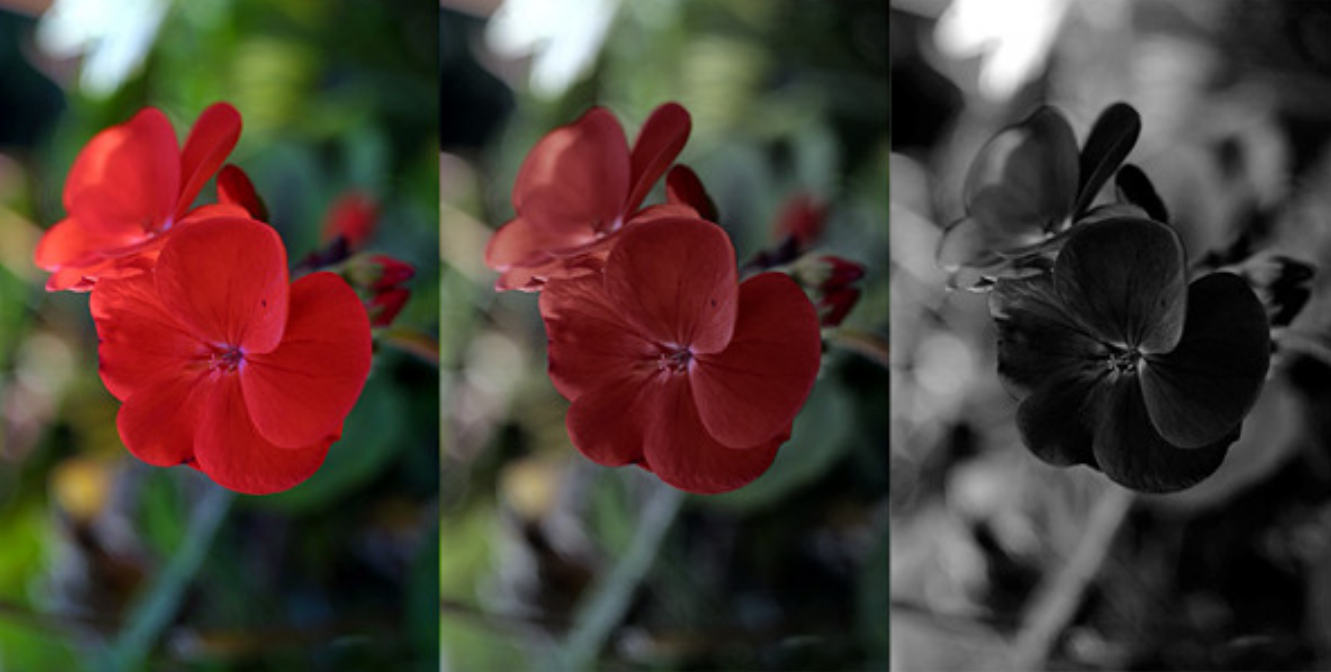
This is not a workshop for corporate clients, but is aimed more at ambitious hobbyists or young photographers who lack formal training in traditional photographic techniques.
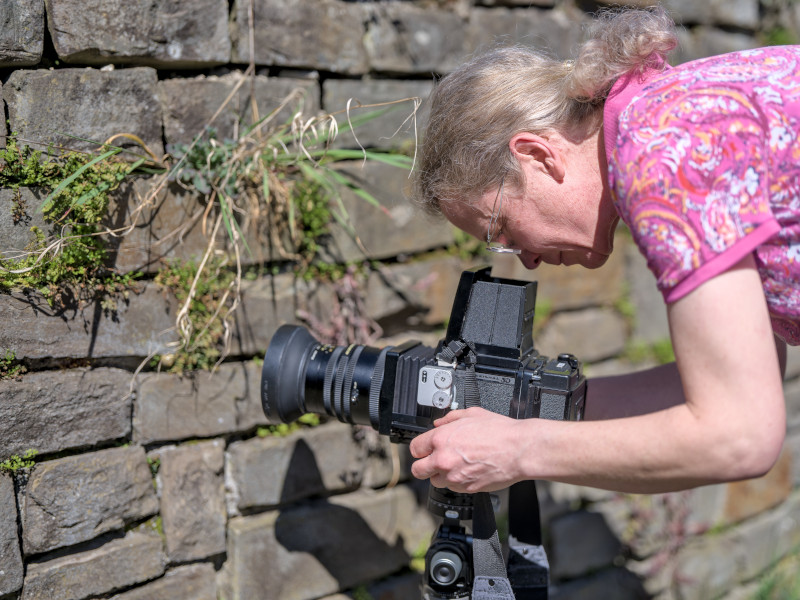
© Karsten Sengebusch – The photographer adjusting the camera (click to enlarge).
In the age of digital photography, a photo costs nothing—except for a little space on a memory card, and even there, thousands of photos can fit. Anything you don’t like is simply deleted. As a result, many people have forgotten how to take the time to plan a shot with foresight. If you’re feeling cynical, you could call this »bulimic photography«.
We shoot analog on medium-format film, which holds only 10 images. Since every image costs money, it makes sense to consciously pay attention to focus, light and shadow, and composition before pressing the shutter.
These skills also help when shooting with digital cameras.
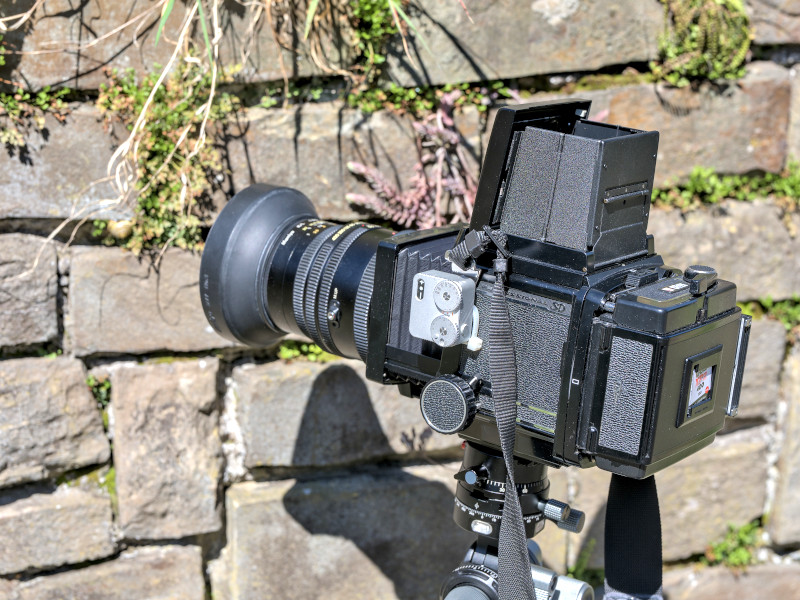
© Karsten Sengebusch – Mamiya RB 67 on a tripod (click to enlarge).
The exposed film is then developed and scanned in a professional lab; in addition to the negatives, the images are made available digitally at a resolution of 28 megapixels.
We are accustomed to the quality of modern digital cameras, which with analog 35 mm film could only be achieved using very low-sensitivity film. The 6 × 7 cm medium format offers 4.5 times the surface area and thus delivers excellent image quality even with higher-sensitivity film.
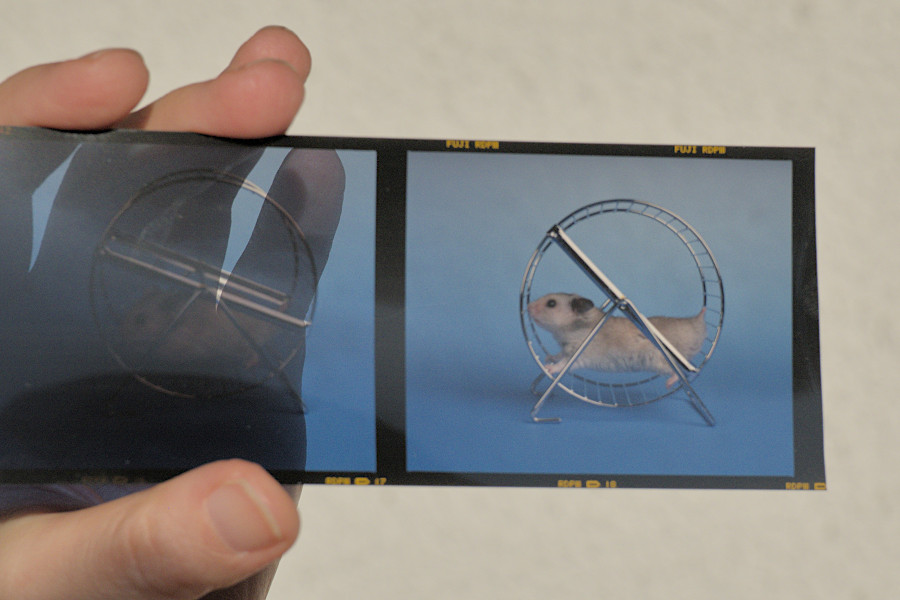
© Karsten Sengebusch – This photo of the medium-format image shows the size of the slide (click to enlarge).
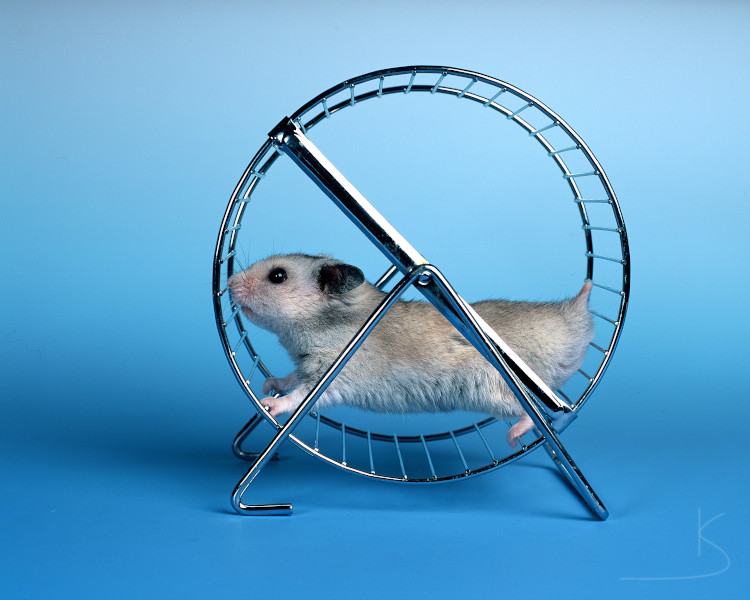
© Karsten Sengebusch – The scan of the slide from above demonstrates the quality of the medium-format photograph (click to enlarge).
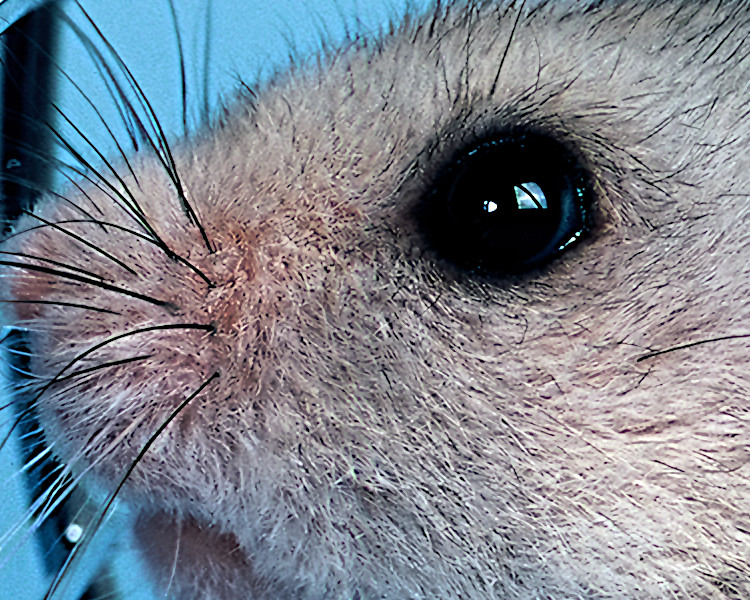
© Karsten Sengebusch – This 1:1 pixel crop demonstrates the high resolution (click to enlarge).
Doing without autofocus requires deliberate control over focus and depth of field. Focusing also demands concentration and a delicate touch.
Because the focal length is significantly longer than that of full-frame or APS-C cameras, a shallower depth of field can be achieved and the focus can be accentuated, which is part of what gives medium-format photography its distinctive look.
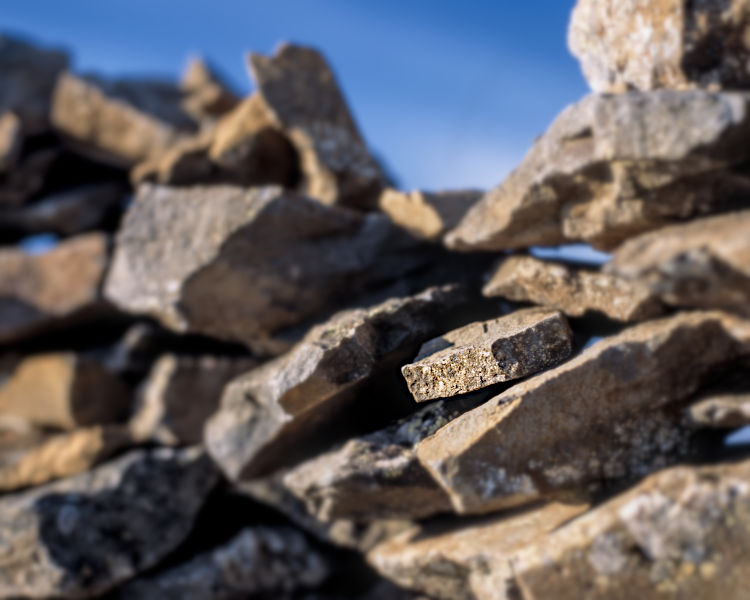
© Karsten Sengebusch (click to enlarge)
Fixed focal lengths require you to adjust your shooting distance and position to suit the subject, which means you have to pay close attention to the geometry and composition of the image.
In addition, fixed focal lengths generally offer higher image quality and larger apertures, allowing them to produce more bokeh.
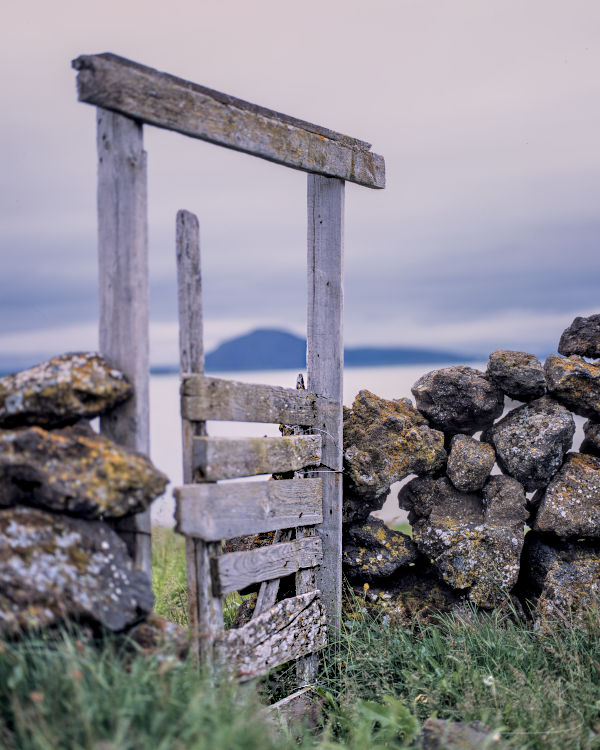
© Karsten Sengebusch (click to enlarge)
Without automatic exposure, your eye for contrast in the image becomes more acute, and you can avoid or intentionally create saturation in the image through overexposure or underexposure.
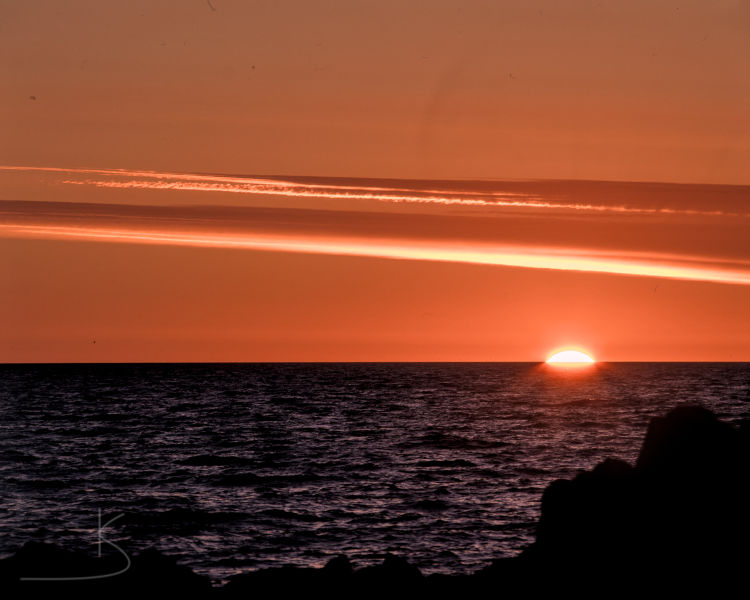
© Karsten Sengebusch (click to enlarge)
Wir haben uns für diese Kamera entschieden, da sie einige interessante Eigenschaften hat:
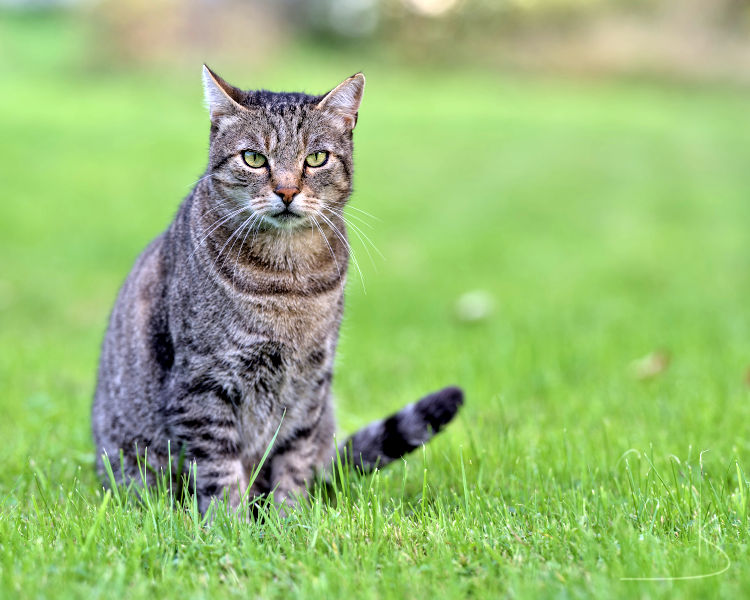
© Karsten Sengebusch (click to enlarge)
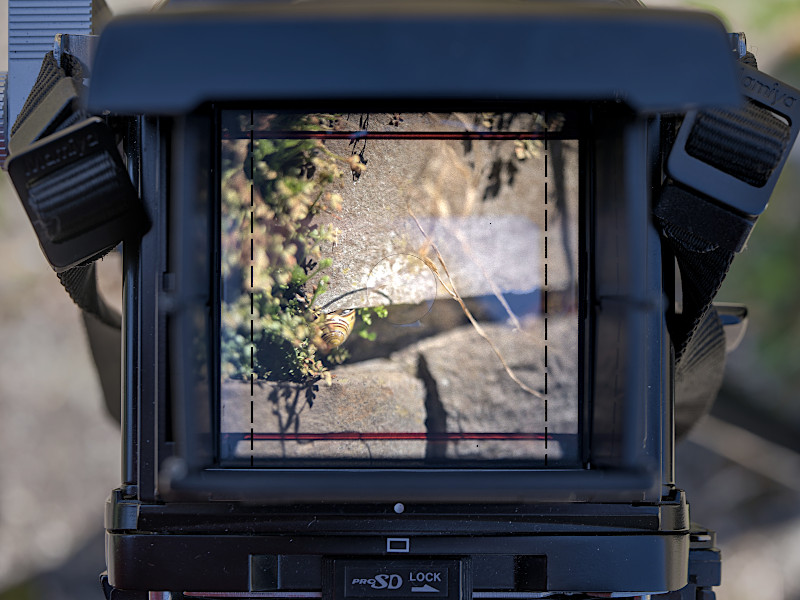
© Karsten Sengebusch – Looking through the viewfinder after framing the subject; the large, bright viewfinder image appears inverted (click to enlarge).
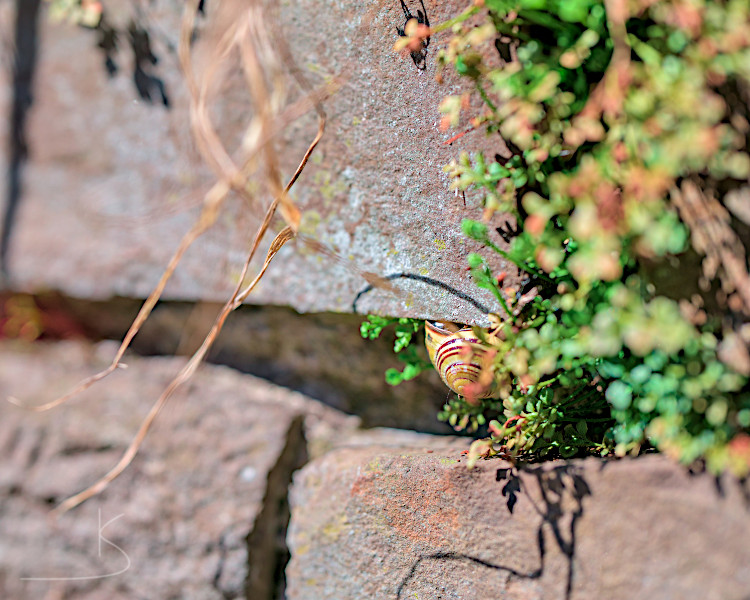
© Karsten Sengebusch – The finished scanned slide (click to enlarge).
Each person receives a film cartridge with the desired film; each pair receives a camera with a lens, filter, light meter, flash, tripod, etc. We encourage discussion within the group about subject selection and composition, as well as the technical aspects of photography.
As a useful supplement, we recommend attending our seminar »Photography in Practice«, beforehand, which provides a very concise yet comprehensive overview of the relevant parameters, filter techniques, and shooting methods.
Our seminars offer you in-depth specialist knowledge, practical examples and interactive discussions—everything to prepare you optimally for the use of state-of-the-art optoelectronic components. We look forward to welcoming you to our events!
The exact dates and venues will be announced here shortly. Please contact us if you are interested or follow us on LinkedIn, to stay up to date.
Here you can easily ask a question or inquiry about our products:
Last update: 2026-04-21

EURECA Messtechnik GmbH
Deutz-Kalker Straße 35, D-50679 Köln

 Phone: +49 (0)221 952629-0
Fax: +49 (0)221 952629-9
info(at)eureca.de
www.eureca.de